





After serfdom was abolished in 1861, the question arose as to how the deep divide between Russian peasants, who lived in orthodoxy with icons, and the Western-oriented educated elite could be bridged. The answer: by converting the peasants to modern knowledge, be it with violence. But the peasants refused. As a result, some voices, which were not taken seriously at first, became loud in their rejection of the “re-education of the peasants” as ethically unacceptable. But soon a new generation of poets, artists, and a surprising number of female artists began to speak out, reevaluating the cultural traditions of the peasants and icons, which had been despised by the elite, and searching for their own path beyond the hegemonic claims of modernity. Since their search, which was primarily socially motivated, questioned the superiority of modern knowledge, which was shaped by a rationalist and atheistic belief in progress, Lenin saw this movement as an attack on the cornerstones of Marxism and, immediately after seizing power, began to undermine it until he and his successors succeeded in completely erasing it from cultural memory.
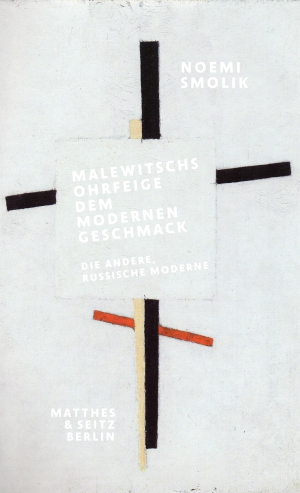
With this book, Noemi Smolik decolonizes the existing historiography of art and opens up new perspectives on what, from today's perspective, were groundbreaking and innovative events in Russia at the beginning of the 20th century.
"The best book on the Russian Avantgarde and Malevich which I have ever read!" – Nic Iljine
Non-fiction
Noemi Smolik grew up in Prague, studied in Cologne and New York, and received her doctorate in art history in 1987. She taught at the HFBK Hamburg and Dresden. Her contributions on contemporary and Russian art appear in FAZ, Artforum, e-flux, Frieze, and Kunstforum. In 2020, she received the Art Cologne Prize for Art Criticism. She is co-founder of Hope Recycling Station in Prague, a platform dedicated to issues of decolonization and racism in Central and Eastern Europe and Central Asia.
